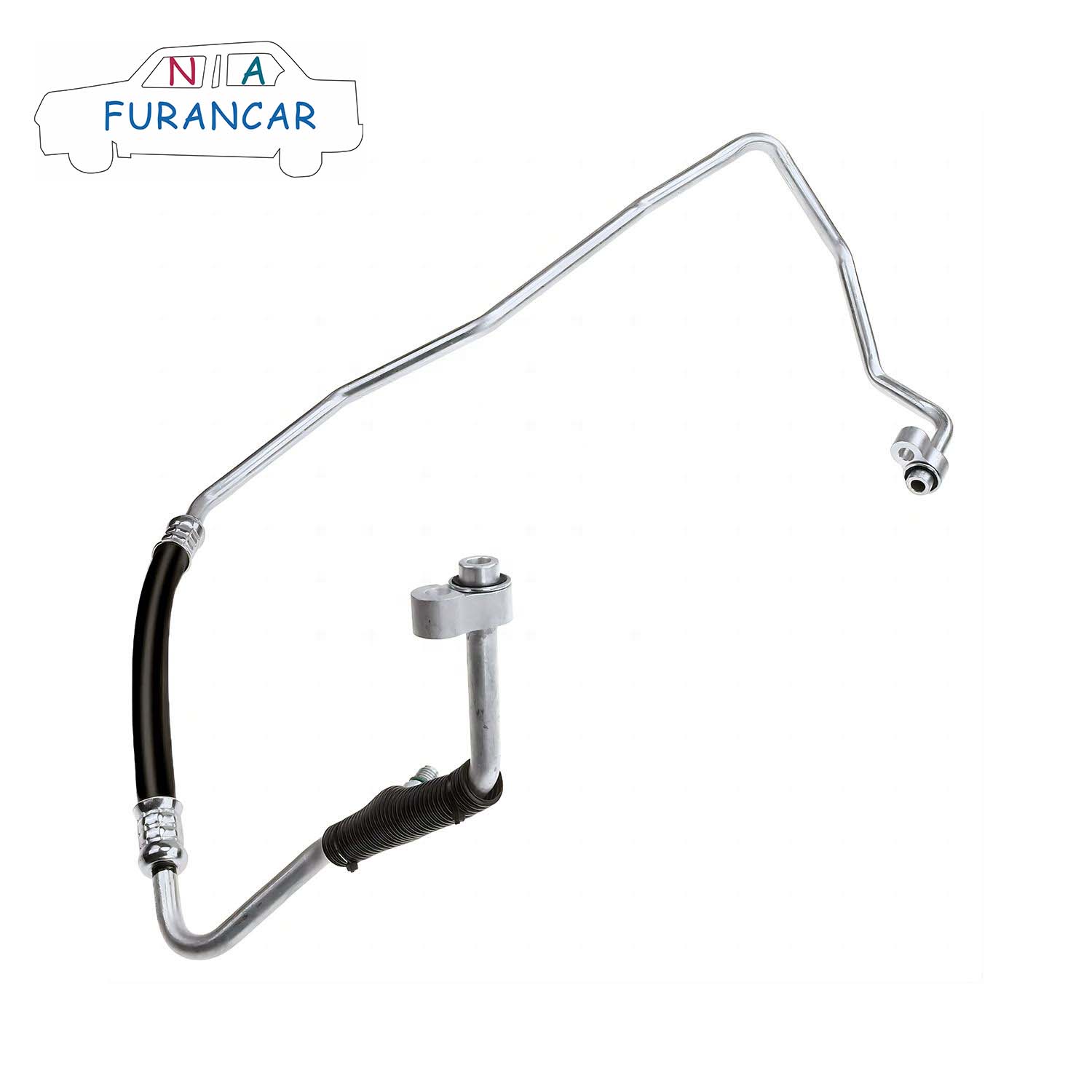
Power steering tubing is blocked

Power steering tubing is blocked


Power steering fluid leaks – The first and most common reason to consider with respect to why you are not getting enough power from your power steering is you may have one or more leaks in your system. You constantly have fluid being forced through your power steering hoses at high pressure, so it is not at all surprising that one of those could at some point spring a leak. If this is your problem, you will need to replace your power steering fluid and find ways to stop the leaks from causing you to lose fluid in the future. 

Power steering pump – Your power steering pumps are what force the power steering fluid through the system to create the hydraulic pressure you need. Even if you have enough power steering fluid in the system, if the pump isn’t working properly, you will not get adequate power steering. It’s hard to know if your problem is being caused by a fluid leak or a worn out pump, although some signs of pump problems are a humming or whining noise when you try to steer and the fact that your power steering fluid reservoir is relatively full even though you are not getting power steering. If this is your problem, you will need to replace the pump, so you want to exhaust all other possibilities before assuming that this is the source of your power steering issues. 
Clogs in the power steering system – A rarer problem that can lead to loss of power steering is a clog in your power steering system. In some cases, rust from worn components or contaminants from dirty power steering fluid can combine to create a block of debris that restricts the flow of power steering fluid through your system. If this happens, you will not get the pressure you need for your power steering to work properly. Clogs can be hard to diagnose as they are very difficult to locate in the system. 
Air in the power steering system – A related problem to a clog — although with different causes — is air in your power steering system. The more air there is in your power steering fluid, the less liquid there is available to create hydraulic pressure. This can be a deceptive problem because you may not notice a particularly low level of liquid in your reservoir, leading you to believe you have a pump problem. Fortunately, the same solutions that you try for a fluid leak can be tried for air in the system, because it is usually caused by loose seals or bad O-rings that allow air to leak into the system. 

Rarely Discussed, Yet Crucial:A Detailed Explanation of the Power Steering System

When reviewing the specification sheet, have you noticed an entry labelled ‘Power Steering Type’? Common options in this section include mechanical hydraulic power steering, electronic hydraulic power steering, and electric power steering. What exactly does ‘Power Steering Type’ refer to? What do these three variants represent? What are the differences and respective advantages and disadvantages of each method?


We've all experienced it firsthand: when the engine isn't running, even with all your strength, it's incredibly difficult to turn the steering wheel. Just imagine – can you really expect to effortlessly manoeuvre something weighing nearly two tonnes? To tackle this issue, a system known as power steering was developed. As the name suggests, its purpose is to assist you in turning the wheel. Currently, the market primarily offers three types of power steering: mechanical hydraulic power steering, electronic hydraulic power steering, and electronic power steering.


1.Mechanical hydraulic power steering

Mechanical hydraulic power steering systems typically comprise components such as a hydraulic pump, oil lines, pressure and flow control valve bodies, drive belts, and reservoir tanks. The operating principle involves the hydraulic pump generating oil pressure to actuate a piston, thereby producing an auxiliary force that drives the steering linkage to assist wheel turning. Vehicles equipped with this system often exhibit heavier steering feel and increased engine load during low-speed, wide-radius turns. Due to the high pressure generated by the hydraulic pump, the power steering system is also more susceptible to damage. Mechanical hydraulic power steering systems are commonly employed in most economy saloon cars.


2.Electronic Hydraulic Power Steering


Primarily comprising a reservoir tank, power steering control unit, electric pump, steering gear, and power steering sensor, the electronic hydraulic power steering system employs an electrically driven electric pump, wherein the power steering control unit and electric pump form an integrated assembly. This system enables smoother cornering and driving by calculating the optimal steering assistance based on signals such as vehicle speed and steering angle, as determined by the electronic control unit. The electronic hydraulic power steering system is currently the most widely adopted power steering system.


3.Electric Power Steering (EPS)

Generally comprising a steering sensor, electronic control unit, electric motor, reduction gear, mechanical steering gear, and power supply, the specific configuration may vary. The absence of hydraulic components such as the hydraulic pump, hydraulic lines, and steering column valve body results in a simpler structure. Under the control of the electronic control unit, the vehicle can readily achieve variable assistance functionality. This means greater assistance energy and lighter steering at lower speeds, while reduced assistance energy and heavier steering are provided at higher speeds. When no steering input is required, the system remains inactive, entering a dormant state awaiting activation. Such power steering systems are commonly found in premium saloon cars, and an increasing number of vehicles are now adopting this form of steering assistance.


Power steering fluid, being subjected to continuous extreme pressure and high-temperature conditions, will deteriorate and become contaminated over time, losing its lubricating properties. This leads to the formation of deposits such as varnish, causing steering difficulties and steering wheel vibration. The power steering system is crucial to our driving safety.


How often should power steering fluid be changed? While vehicle manufacturers do not strictly stipulate a replacement interval for power steering fluid, it is advisable to replace it every 40,000 to 50,000 kilometres or within 2 to 3 years to prevent contamination or degradation that could lead to further issues. Should inspection of the power steering system reveal the fluid level below the minimum mark, a noticeable thinning of the fluid, or a darkening of its colour, replacement should be carried out immediately.


Finally, a word of caution to many motorists who habitually substitute gearbox oil for steering fluid: this practice is not recommended. The two fluids differ in viscosity, molecular structure and function, and may damage the steering mechanism. While the effects may not be immediately apparent, the internal rubber seals within the steering unit will deteriorate, leading to persistent oil leakage. The steering system is crucial for driving safety, reducing the effort required to turn the wheel and ensuring a smoother driving experience. Therefore, regular maintenance and inspection are absolutely essential!


Different types of power steering systems require distinct maintenance approaches. For mechanical hydraulic systems, routine checks must prioritise ensuring the power steering reservoir remains adequately filled with steering fluid. Additionally, avoid holding the steering wheel at full lock for extended periods. Regularly monitor whether steering feels excessively heavy or produces unusual noises. Should such symptoms arise, promptly inspect components such as the oil pump V-belt and internal pressure levels. For electro-hydraulic systems, routine checks on power steering fluid levels remain crucial; immediate investigation is required whenever the warning light illuminates. Regarding electric power steering systems, despite their relatively simple construction, maintenance demands more than visual inspection. Should steering become unresponsive or exhibit heavy operation, diagnostic instruments become essential for accurate measurement.


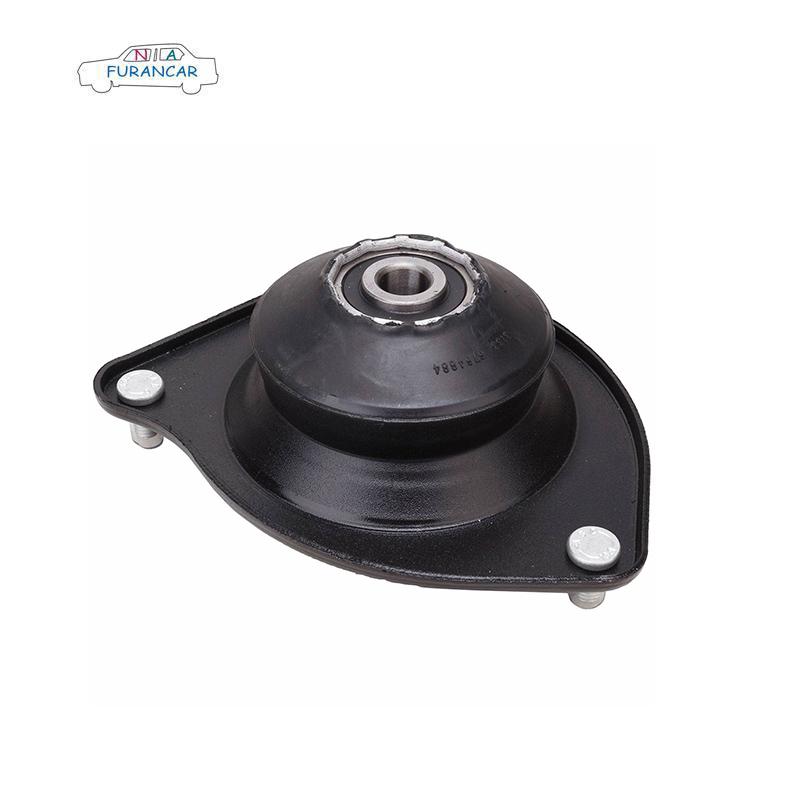
Shock absorber assembly is distinguished from shock absorber

Shock absorber assembly is distinguished from shock absorber

1. Different constituent structures

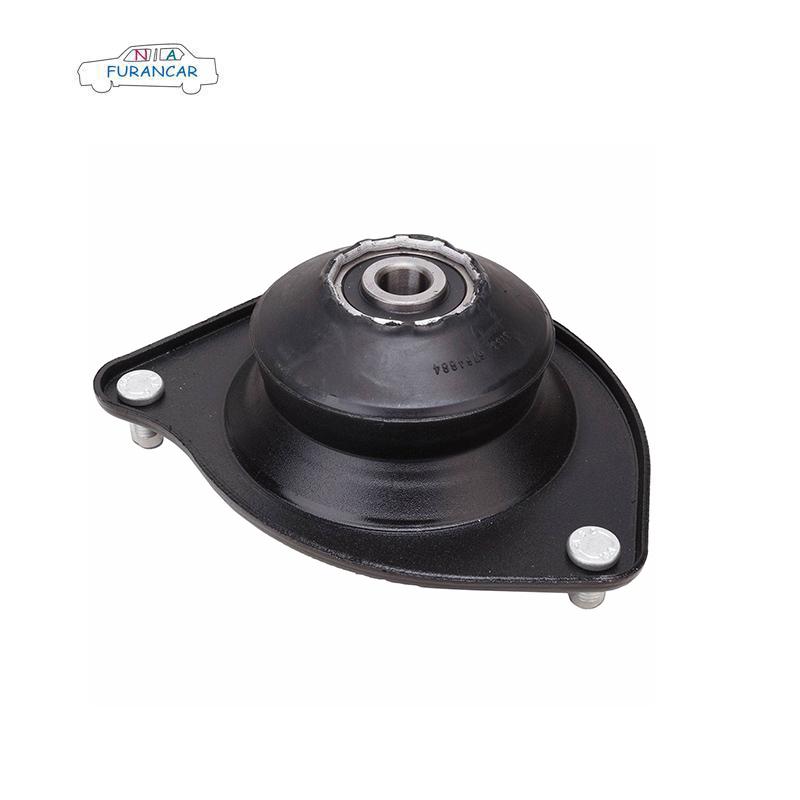
The shock absorber is only part of the shock absorber assembly; The shock absorber assembly is composed of shock absorber, lower spring pad, dust jacket, spring, shock absorber pad, upper spring pad, spring seat, bearing, top glue and nut.

2. Different difficulty of replacement

The replacement of independent shock absorbers is difficult to operate, requiring professional equipment and technicians, and the risk factor is large; Replacing the shock absorber assembly is a simple matter of turning a few screws.

3. Price difference

It is expensive to replace each part of shock absorber set separately. The shock absorber assembly, which contains all parts of the shock absorber system, is cheaper than replacing all parts of the shock absorber.

4. Different functions

A separate shock absorber serves only as a shock absorber; The shock absorber assembly also plays the role of suspension pillar in the suspension system.

tips

Therefore, it is recommended to replace the shock absorber assembly directly, and the replacement of the shock absorber assembly is recommended to replace in pairs, in order to prevent the car from causing instability, serious words will also affect driving safety.

Should You Get an Alignment After Getting New Shocks and Struts?

Should You Get an Alignment After Getting New Shocks and Struts? 
The short answer is—it depends on the type of suspension your car has. If the tires are wearing evenly and there is no steering pull or wander, an alignment isn’t typically necessary. On some vehicles, the installation of new shocks and struts may affect your car’s wheel alignment.However, there are some instances where alignment is not required after replacing the struts or shocks. 

There are many different suspension designs in use today. Most modern cars use either a MacPherson strut or a modified strut front suspension (some also have struts in the rear). 

Consulting the factory repair information for your application is the best way to determine whether your car needs an alignment after shock/strut replacement. You can also contact your local dealership service department for the answer.  
There’s one more thing that you should keep in mind—any suspension modification will automatically require a subsequent alignment to be performed. For example, replacing coil springs on a strut affects ride height, which has a direct effect on the camber angle.  

If you’re simply reusing the old coil springs, this shouldn’t be a problem. But if you are replacing it with a different spring that has a longer or shorter coil, a wheel alignment would be imperative. 

To sum it up, here are the answers to the question—do you need an alignment after replacing shocks and struts? 

Yes, if the vehicle manufacturer recommends an alignment after replacement.  
Yes, if you did any suspension modifications that do not follow manufacturer recommendations. 
Yes, if you are replacing your tires at the same time. 
If you’re still unsure, you can always err on the side of caution and take your vehicle to a professional so they can check whether an alignment is required. 

The role of Stabilizer Links

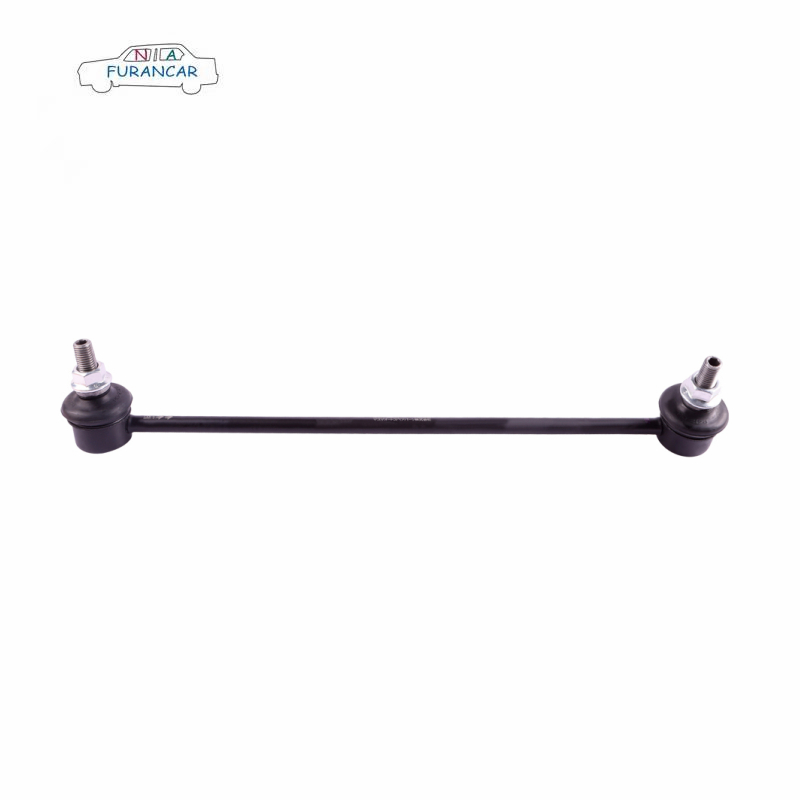
Stabilizer links act as components of auto suspensions, connecting several other parts that take much of the punishment as you pass over pot holes and other road imperfections.  
Function  
Modern cars use segmented suspensions. Stabilizer or sway bars have stabilizer links. The stabilizer bar holds pairs of wheels connected, while stabilizer links hook this larger piece with arms that go up to the wheels themselves. Ball joint connections enable turning and suspension travel.  

Significance  
Stabilizer bars links improve handling and shock absorption, keeping the car from swaying too much as you turn–which could lead to loss of control. Adding stabilizer links between the main bars and the wheels refines this process of control, so cars handle “tight.”  

Types  
With the prevalence of pot holes and bumpy roads, your entire suspension needs to withstand shocks, so stabilizer links employ cast iron, steel and alloy in their construction. Most have at least one ball joint for connecting with adjacent suspension components. A minority of stabilizer links lack ball joints altogether. Japanese and European car makers often employ this flat type.  

Identification  
You can identify stabilizer links by looking for ball jointed metal connections next to the wheels.Mechanics may refer to them simply as ball joints. Related but different parts of the suspension, such as idler and Pitman arms, can be found at the center of the undercarriage below your steering wheel. Most stabilizer links measure around 10 to 15 inches.  

Effects  
Worn stabilizer links affect steering, ride and fuel efficiency. Symptoms include a creaking or screeching noise as you pass road imperfections, plus wobble, skip and “dead zones” in steering. Don’t overlook these signs, as broken stabilizer links can lead to loss of control.  

Top 5 Reasons Lower Control Arm Bushings Are Noisy.

Top 5 Reasons Lower Control Arm Bushings Are Noisy.

People unfamiliar with cars may not understand what’s going on when they hear the strange jingle.

While there can be many reasons for unusual noise in a vehicle, a problem with the lower control arm bushing can be very noticeable.

These noises are almost similar to knocks around the control arm area. Below are the five most common reasons for reducing control arm bushing noise.

  1. Bushing wear.

    Bushings don’t last forever. The more miles the vehicle travels, the more wear on the lower control arm bushings.

    You will start to hear a slight bump at first, but as bush wear increases, the bump will become louder and more consistent.
  2. The bushing is loose.

    If your lower control arm bushing is loose then it will be knocked between the metal parts surrounding it.

    This does not necessarily mean the bushing is worn.

    Maybe you’re driving over a loose bump.

    While working on another area of your vehicle, either that or the mechanic may have accidentally loosened.

    No matter what the cause, a loose bushing will always make the same knock.
  3. Damaged bushing.

    The lower control arm bushing may break due to excessive wear.

    It can also be accidentally damaged by a mechanic who is doing other work.

    A damaged control arm bushing produces a very loud ding, not a progressively louder than a worn bushing.
  4. Driving on uneven terrain.

    If you are driving over rough terrain, such as gravel or rocky roads, you will hear a knock or clang.

    Hearing will be amplified.

    Bushings in good condition will not loosen or rattle from driving on this terrain.

    However, if the bushing is not secured in place, the erratic movement of the vehicle over the terrain may loosen the bushing even more.
  5. Hard acceleration.

    If your bushing is loose, you will hear the loudest knock when you take off from a standstill.

    For example, when your vehicle is parked somewhere and you switch gears to drive and then press the gas pedal, the click will be loudest at this point.


What exactly is a turbocharger?

The engine generates power by burning fuel within the cylinders to perform work. As the amount of fuel input is constrained by the volume of air drawn into the cylinders, the engine's power output is consequently limited. Should the engine's operating performance already be at its optimum state, increasing output power can only be achieved by compressing more air into the cylinders to increase the fuel quantity, thereby enhancing the engine's capacity to perform work.


The turbocharger system is one of the most common forced induction systems in supercharged engines.

If, within the same unit of time, a greater volume of air-fuel mixture can be forcibly compressed within the cylinder (combustion chamber) for combustion (a small-displacement engine can “draw in” the same air volume as a large-displacement engine, thereby increasing volumetric efficiency), it can generate greater power output than a naturally aspirated engine at the same rotational speed. The principle is akin to directing an electric fan into the cylinder, forcibly pumping air into it to increase the volume and thereby achieve greater horsepower. The difference lies in the power source: instead of an electric motor, the fan is driven by the exhaust gases expelled from the engine.

Typically, engines incorporating such forced induction achieve at least a 30-40% power increase. This remarkable effect is precisely why turbochargers are so highly prized. Moreover, delivering optimal combustion efficiency and substantial power gains represent the core value a turbocharged system offers to a vehicle.

So how exactly does a turbocharger function?


First, the exhaust gases expelled from the engine drive the turbine impeller at the exhaust end (right side in the diagram above), causing it to rotate. This rotation in turn drives the connected compressor impeller on the opposite side (left side). The compressor impeller then forcibly draws air through the inlet. This air is compressed by the rotating blades before entering progressively narrower compression passages for secondary compression. The temperature of this compressed air exceeds that of the intake air, necessitating cooling via an intercooler before injection into the combustion chambers. This cyclical process constitutes the operating principle of the turbocharger.


The function of the throttle valve


Within the engine's intake system, there are two principal components: firstly, the air filter, which is responsible for filtering impurities from the air; and secondly, the intake manifold, which directs the air into the cylinders. Within the intake manifold lies a crucial component known as the throttle valve.

The throttle valve's primary function is to regulate the volume of air-fuel mixture entering the cylinders. When driving, the depth to which we depress the accelerator pedal directly controls the throttle valve's opening. The deeper the pedal is pressed, the wider the throttle valve opens, allowing greater air-fuel mixture intake and consequently increasing the engine's rotational speed.


Traditional cable-operated throttles utilise a steel cable connected at one end to the accelerator pedal and at the other to the throttle valve, employing a 1:1 transmission ratio. This method yields less than ideal control precision. In contrast, modern electronic throttle systems employ position sensors to transmit data such as the force and amplitude of the accelerator pedal depression to the control unit for analysis. This process interprets the driver's intent, after which the ECU calculates the actual throttle opening required and issues commands to operate the throttle motor, thereby achieving precise throttle control.


Is the intake manifold length variable?


A control valve installed within the intake manifold can divide it into two sections by opening and closing, thereby altering its effective length. This adjustment of the intake manifold's length primarily serves to enhance the engine's intake efficiency across varying rotational speeds, thereby improving power delivery performance throughout the entire rev range.

Why does the exhaust manifold have such an odd shape?


The vehicle's exhaust system primarily comprises the exhaust manifold, three-way catalytic converter, silencer and exhaust pipes. Its principal function is to expel the combustion exhaust gases from the cylinders into the atmosphere.


The exhaust manifolds we commonly observe feature rather peculiar shapes. This design serves to minimise interference between exhaust gases from different cylinders or the occurrence of backflow, thereby preventing any detrimental impact on the engine's power output.


How does a turbocharger boost pressure?


Turbocharging is commonly abbreviated as Turbo or T. When we see markings such as 1.4T or 2.0T on a vehicle's rear, it indicates that the engine is turbocharged.


The turbocharger primarily consists of two components: the turbine and the compressor, connected by a drive shaft. The turbine's inlet is linked to the engine's exhaust manifold, while its outlet connects to the exhaust pipe. The compressor's inlet is connected to the intake manifold, and its outlet is connected to the intake manifold. The exhaust gases expelled from the engine strike the turbine, causing it to spin at high speed. This, in turn, drives the coaxial compressor to rotate rapidly, forcibly delivering pressurised air into the cylinders.


Turbocharging primarily harnesses the energy from engine exhaust gases to drive a compressor, thereby boosting the intake air pressure. This process consumes virtually no engine power, delivering excellent sustained acceleration. However, at low speeds, the turbocharger cannot engage promptly, resulting in a certain degree of lag.


What about mechanical supercharging?


Mechanical supercharging primarily involves using the crankshaft's power to drive a mechanical air compressor, thereby compressing air. However, this process incurs a certain degree of power loss from the engine during operation.


As the mechanical supercharger is directly driven by the crankshaft, it commences operation whenever the engine is running. Consequently, the engine delivers impressive torque output even at low revs. However, during high-speed operation, the mechanical supercharger imposes significant power losses on the engine, resulting in less pronounced power gains.


How does a twin-turbocharged engine work?


A twin-charged engine, as the name suggests, refers to an engine equipped with two superchargers. Should an engine utilise two turbochargers, it is termed a twin-turbocharged engine.


To address turbocharger lag in exhaust gas-driven systems, two identical turbines are connected in parallel on the exhaust manifold. At low engine speeds, the reduced exhaust flow can drive the turbines to high rotational speeds, generating sufficient boost pressure and thereby minimising turbo lag.

As previously noted, turbochargers exhibit lag at low engine speeds, yet deliver substantial boost at high speeds, markedly enhancing engine power without consuming significant engine power. In contrast, mechanical superchargers are directly driven by the engine's rotation, eliminating turbocharger lag but incurring some power loss and offering lower boost levels. Combining these two systems allows their respective advantages to complement each other.

As with the 1.4-litre TSI engine fitted to the Volkswagen Golf GT, the designers combined a turbocharger with a supercharger. The supercharger is mounted on the engine's intake system, while the turbocharger is positioned on the exhaust system. This arrangement ensures effective boost delivery across the entire engine speed range, from low to high revs.


Working Principle of a Turbocharger


The operating principle of a turbocharger is actually quite straightforward. Simply put, it harnesses the exhaust gases emitted by the engine to drive the turbine. This turbine, in turn, drives a fan connected to the same shaft, continuously forcing fresh air into the engine cylinders. Consequently, more air enters the cylinders per unit time, thereby enhancing the engine's efficiency.


Turbochargers are high-temperature components, as the gases driving their operation are drawn directly from exhaust gases expelled from the cylinders, reaching temperatures of 900°C to 1000°C. Under full load conditions, the turbine's rotational speed can attain 180,000 to 200,000 revolutions per minute. Operating at such extreme temperatures and rotational speeds necessitates exceptionally efficient and stable lubrication. Moreover, functioning within high-temperature and high-pressure conditions demands that all turbocharger components and lubricants exhibit excellent heat resistance and sealing properties. Consequently, maintenance should focus on the following aspects:


1.Selection of engine oil

Many motorists find themselves at a loss when selecting engine oil for replacement. Damage to turbochargers typically stems from compromised oil seals between the unit and intake manifold, resulting in significant oil consumption. Professional investigations reveal that a significant proportion of oil seal failures stem from owners failing to change their engine oil at the recommended intervals, or using substandard oil. This prevents the floating turbocharger main drive shaft from receiving adequate lubrication and heat dissipation, causing the oil seal to deteriorate under high temperatures and resulting in oil leakage.


It is therefore recommended that turbocharged engines should be fitted with high-quality engine oil that offers excellent high-temperature resistance and oxidation stability, whilst also ensuring that the oil change interval is appropriately shortened.


2.Ensure the turbine remains clean

The clearance between the turbocharger shaft and its bearing sleeve is extremely small. Consequently, if contaminated engine oil is used, or if impurities enter due to a dirty oil filter, this will cause excessive wear on the turbocharger. Furthermore, should the intake air contain significant impurities, these dust particles entering the high-speed turbine impeller will collide with it. This results in unstable turbine operation and accelerated wear of the bearing bushings and seals. Consequently, vehicles equipped with turbochargers must pay particular attention to promptly replacing both the oil filter and air filter to maintain the cleanliness of the turbocharger.


3.Cold starts should be gradual; allow the engine to idle for a moment after warming up before switching it off.


During the initial stages of a cold start, engine oil is typically at a low temperature and exhibits greater viscosity, resulting in suboptimal lubrication. Reaching normal operating temperature requires a gradual process and time. Forcing the turbocharger to operate at full load within these first few minutes will increase wear and tear, thereby shortening its lifespan.

The correct approach is as follows: during the first few minutes of driving, maintain a slow speed for several minutes to allow the oil to reach its optimal state before accelerating to high engine speeds. This is particularly crucial in northern winters, where it is essential to let the vehicle warm up after a cold start before proceeding. This benefits both the vehicle and the driver.

When parking, as the turbo operates at extremely high temperatures, it is advisable to idle the engine for a short while before switching it off. At this stage, the engine's oil and cooling systems remain active, allowing the turbo's temperature to gradually decrease. Note that after switching off the engine, the turbo will continue to spin due to inertia, and it still requires oil lubrication. If you abruptly switch off the engine, the entire engine system ceases operation, abruptly halting both the turbocharger's cooling system and oil supply. It would then rely solely on natural cooling, which can drastically reduce the turbocharger's lifespan.

4.Regular inspections are important


Much like regular health check-ups for the human body, cultivating this good habit helps us detect turbocharger faults promptly and prevent problems before they arise. For instance: inspect the turbocharger's exterior for damaged sealing rings; check oil inlet and return pipe connections for looseness or leakage; examine the exhaust outlet for residual oil; verify the compressor inlet duct walls are free of oil; and listen for unusual noises or abnormal vibrations. Should any of these irregularities be detected during routine operation, prompt professional servicing is essential to prevent more severe component damage.

What Is Power Steering Hose Replacement?

What Is Power Steering Hose Replacement?
The power steering hoses and the connecting components can be located in a number of places. They may be under the axle, while the gearboxes could be near the wheel well or somewhere along the frames. The difference in location may not make the replacement process much longer or more involved for the mechanic, but the mechanic will likely look up manufacturer’s specifications for the vehicle before attempting work on the hoses to ensure they are dealing with the right components. They want to be sure they know where to look for the problem and not end up messing with the wrong components.

This process should be fairly quick, taking less than two hours and not involving more than a few parts at most. However, if you drive your vehicle in a damaged state, then more damage is likely to occur.

Benefits of Power Steering Hose Replacement
Since the hoses supply fluid to the power steering system, you need them if you are going to have an easy time driving the car. You will have better control over the wheel and the car itself with these hoses replaced, if they were giving you trouble before. You will also prevent damage to other systems that could have accrued if the problem was allowed to persist.
What Is Done during Power Steering Hose Replacement?
The mechanic will find out where the hoses are located, first of all, and check for leaks or other problems to ensure the issue is localized and that the hoses are all that needs to be changed out.

WHY DOES MY SWAY BAR LINK BREAK?

To figure out why your sway bar link breaks, it's first important to understand how sway bars work. The sway bar, also known as an anti-roll bar or stabilizer bar, is a vital part of your vehicle’s suspension system and keeps it level during cornering. Sway bars are usually a long and hollow arched steel bar attached to the chassis, connecting the left and right sides. This stabilizes your vehicle while still allowing the suspension to move on its own.

Sway bar links are what connect the outer end of the sway bar to the suspension component. Because the sway bar itself is a torsional swing, the sway bar link smooths the motion transfer between the sway bar and the control arm. The sway bar link maintains the camber angle of the inner wheels to control motion.

Like many automotive parts, over time the sway bar links will wear out. Water intrusion that leads to rust, age, and lack of lubrication all contribute to deterioration over time. A knocking noise from your suspension, rattling sounds while taking corners and hitting bumps, and excessive body roll are signs it may be time for a replacement. Sway bars and their components are all paramount to driver safety.

Everything you need to know about HOWO telescopic aerial work platform truck

▲ What is the HOWO telescopic aerial work platform truck?


The HOWO telescopic aerial work platform truck, also known as HOWO truck mounted aerial work platform, HOWO bucket lift  truck, HOWO manlift truck, is a special engineering vehicle based on the HOWO 4×2 light truck chassis and equipped with a telescopic boom aerial work platform. It is mainly used for high-altitude operations such as construction, advertising installation, power line maintenance, and garden trimming.


HOWO 33m aerial work platform truck


▲ HOWO manlift truck structure:

The HOWO telescopic boom manlift truck mainly consists of a chassis, a slewing mechanism, a lifting mechanism, a working platform, outriggers, and a control system. The specific structure is shown in the figure below:


HOWO telescopic aerial work platform truck drawing


▲ Features of HOWO Telescopic Bucket Lift Truck:

1. 7-section boom with 6 sections synchronously telescoping. Adopts 16-sided high-strength steel, offering high strength and light weight.

2. Maximum working height: 33m; Maximum working radius: 18m; Platform rated load: 200kg.

3. Front V-shape and rear V-shape hydraulic outriggers with a longitudinal span of 5800mm and a lateral span of 6100mm. Individually adjustable for strong stability.

4. CAN bus electronic control system equipped with a wireless remote controller with an effective range of approximately 100 meters.

5. Equipped with safety devices such as an emergency power source, bi-directional hydraulic balance valves, and outrigger soft leg protection.

HOWO 33m bucket lift truck

Chassis

HOWO 4×2

Engine

YN4102, 116HP, diesel engine

Max. working height

33 meters

Max. working radius

18 meters

Bucket size

1800×700×1100 mm

Rated load of bucket

200 kg

Rotation angle

360°

Outriggers

X-type, 4 pieces, individually adjustable


▲ HOWO truck mounted aerial platform technical drawing:


HOWO 33m bucket lift truck drawing


▲ HOWO aerial work bucket truck application areas:

● Municipal Engineering: Streetlights, traffic facilities, surveillance camera installation and maintenance

● Power and Telecommunications: Line erection, base station antenna maintenance

● Building Construction: Exterior wall installation, curtain wall maintenance, aerial equipment installation

● Landscaping and Sanitation: Tree pruning, high-rise property cleaning and maintenance

● Transportation and Bridges: Overpass and tunnel facility maintenance

● Advertising Venues: Billboard and stadium aerial equipment installation and maintenance

HOWO 33m man lifter truck HOWO 33m man lifter truck


Take a look at HOWO aerial lift bucket trucks that may be of interest to you:

HOWO Straight Aerial Platform Truck Safety Monitoring System introduction

HOWO 154HP Truck Mounted Aerial Work Platform